
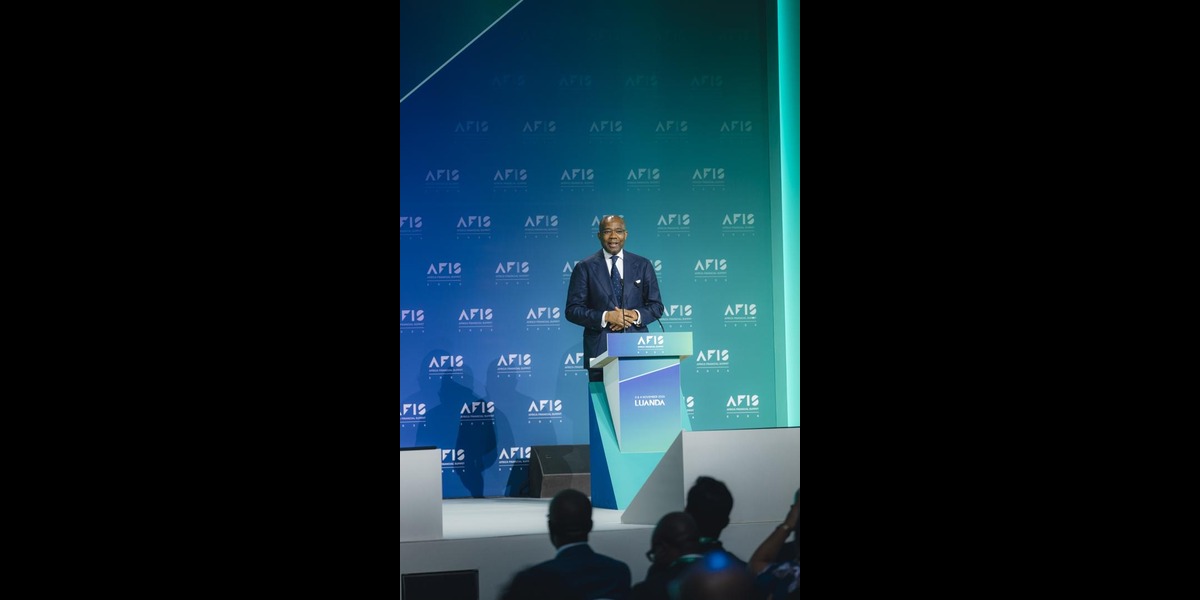

Chairman of Access Holdings Plc, Aigboje Aig-Imoukhuede, has challenged African central banks, monetary establishments, and policymakers to transfer past preserving monetary stability and deal with translating the continent’s capital into productiveness, financial progress, and shared prosperity.
Speaking at the closing session of the Africa Financial Summit (AFIS) 2026 in Luanda, Angola, Aig-Imoukhuede argued that Africa’s subsequent part of financial improvement would rely much less on the amount of capital accessible and extra on how successfully that capital is mobilised and deployed.
“The real question is: Are we making the capital we have count?” he requested.
Reflecting the summit’s theme, Making Capital Count: Unlocking Growth Through African Finance, he challenged members to rethink how monetary establishments can unlock Africa’s financial potential.
Aig-Imoukhuede acknowledged African central banks’ progress in strengthening financial stability, banking supervision, and monetary resilience.
Several economies had achieved macroeconomic stability, he famous, however its impression would stay restricted until it translated into productive funding and improved residing requirements.
“A banking system can be well, can be as safe as you want it to be, it can be profitable, but then it can still serve an economy that is very underperforming,” he stated.
According to him, the success of Africa’s monetary programs should more and more be measured not solely by inflation, monetary stability, and institutional profitability, but additionally by their contribution to lifting individuals out of poverty and increasing financial alternative.
Unlocking Capital Trapped in African Businesses
A central theme was the necessity to launch liquidity trapped in business transactions involving small and medium-sized enterprises.
He noticed that hundreds of thousands of African companies create worth however wrestle to entry working capital to maintain and broaden operations.
He argued that companies supplying items and companies to creditworthy company prospects ought to have the ability to acquire financing in opposition to these transactions at charges reflecting the credit score standing of their patrons.
“When an SME supplies goods to a creditworthy buyer, that SME should be able to attract capital and financing at the same cost of the credit rating of that buyer immediately,” he stated. Drawing consideration to developments in India and Brazil, the place digital invoicing programs have supported extra environment friendly business financing, he challenged African regulators and monetary establishments to develop comparable infrastructure.
This might enhance entrepreneurs’ entry to finance, strengthen supply-chain liquidity, and unlock productive capability constrained by inefficient cost programs.
He additionally known as for higher mobilisation of long-term home financial savings into infrastructure and real-sector investments.
“We can’t use bank deposits, which can be withdrawn tomorrow, to finance long-term projects which require 20-year money,” he noticed. Citing the Dangote Refinery as proof of traders’ urge for food, he urged Africa to join family financial savings, pension property, and institutional capital to long-term alternatives.
Aig-Imoukhuede additional warned that extreme authorities borrowing might constrain private-sector entry to finance, calling for stronger coordination between financial and monetary authorities. He steered that future AFIS discussions ought to carry finance and price range ministers along with central financial institution governors to tackle the structural challenges limiting productive funding.
African Banks Must Translate Scale into Global Competitiveness
Turning to the banking trade, Aig-Imoukhuede challenged African monetary establishments to be sure that their rising continental presence delivers financial worth.
He acknowledged alternatives created as worldwide banks cut back their publicity and indigenous establishments fill the gaps.
However, he cautioned that changing international possession with African possession shouldn’t, in itself, be thought of adequate progress.
“We must translate the scale we are building into globally competitive value,” he declared.
African banks, he argued, want the worldwide attain and infrastructure to serve companies as successfully because the multinational establishments they’re changing.
Using Access Bank’s operations in Angola for instance, he defined that the Group’s ambition extends past turning into a home banking establishment.
“We haven’t come to Angola to serve you simply as a strong domestic Angolan bank, we want to serve you as a stronger and better international bank than those who have left,” he stated.
He emphasised the significance of African banks establishing significant connections with worldwide monetary centres, creating clearing capabilities, and investing in cost infrastructure that permits African companies to take part effectively in international commerce. Drawing comparisons with the evolution of Asian banking establishments, notably in China, he argued that Africa’s monetary establishments should develop the capability to join home economies with worldwide markets whereas supporting deeper regional integration.
His remarks underscored a broader shift within the African banking narrative: from geographic enlargement and institutional scale to competitiveness, connectivity, and measurable financial worth.
Integration Must Come Before a Common African Currency
Aig-Imoukhuede additionally known as for sooner financial and monetary integration, arguing that fragmented markets constrain Africa’s skill to mobilise capital and develop. He cautioned in opposition to permitting discussions a few widespread African foreign money to overshadow the extra quick process of integrating markets, monetary infrastructure and the motion of products, companies, and folks.
“Integration must precede monetary union,” he stated. Illustrating the sensible limitations confronting African integration, he recounted how his chief of workers had been unable to accompany him to Angola due to visa difficulties.
He questioned how the continent might aspire to develop built-in monetary markets whereas sustaining restrictions that complicate the motion of individuals conducting reliable enterprise throughout African borders.
According to him, significant monetary integration requires a coordinated effort to enhance cross-border funds, set up interoperable monetary programs, deepen capital markets, and create situations that permit African companies and traders to function throughout nationwide boundaries.
He outlined three priorities for central banks and policymakers: constructing interoperable monetary infrastructure, creating built-in African monetary markets, and pursuing higher macroeconomic convergence.
These reforms, he argued, would allow capital to stream extra effectively throughout borders, broaden funding alternatives, and strengthen the continent’s collective financial resilience.
He additionally burdened that integration requires greater than technical reforms or regulatory agreements. It calls for a real dedication amongst African leaders and establishments to the concept of a extra related and affluent continent.
Making Capital Count Over the Next Two Decades
Looking forward, Aig-Imoukhuede challenged Africa’s monetary leaders to contemplate what significant progress ought to appear to be over the following 10 to 20 years. He questioned whether or not African companies would have the ability to elevate capital extra effectively throughout borders, whether or not pension funds would more and more finance infrastructure moderately than focus on authorities securities, and whether or not monetary establishments would reach translating the continent’s assets into broader prosperity.
“Will we make capital count?” he requested. Despite the challenges, he expressed confidence that collaboration amongst governments, regulators, monetary establishments, and private-sector leaders would advance Africa’s improvement.
For Access Holdings, his message reinforces the significance of translating the Group’s increasing African footprint into sustainable financial worth by way of stronger monetary connectivity, productiveness and options that allow companies and communities to develop. Ultimately, Aig-Imoukhuede’s tackle challenged Africa’s monetary trade: the following measure of success won’t merely be how a lot capital the continent attracts, how secure its banks turn out to be, or how extensively its monetary establishments broaden.
It might be how successfully Africa converts its monetary assets into productive enterprise, built-in markets, and lasting shared prosperity for its individuals.