.Tasks judiciary to probe prosecution methods, seal procedural gaps exploited by criminals
Deji Elumoye in Abuja
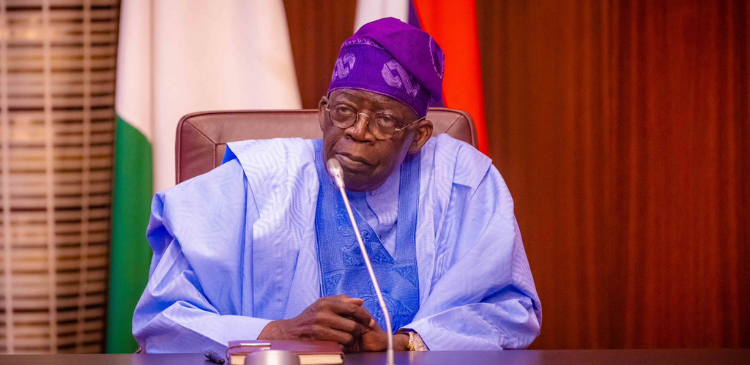
President Bola Tinubu has declared that the cankerworm referred to as corruption on Nigeria can’t be uprooted with out an unbiased and reform minded bench.
Speaking on Tuesday in Abuja in the course of the annual EFCC/NJI Capacity Building Workshop for Judges and Justices, Tinubu maintained that there can be no significant progress in uprooting graft “without an independent, progressive, and reform-minded Bench.”
The President, represented on the event by Vice President Kashim Shettima,
whereas commending the Economic and Financial Crimes Commission (EFCC) for convening the eighth version of the Judges and Justices Workshop mentioned the workshop with the theme, “Investigation and Prosecution of Economic and Financial Crimes in a Digital Age,” was well timed and vital in “fostering the institutional cohesion required to confront corruption’s ever-changing architecture in Nigeria.
“My Lords, we confront a rapidly shifting criminal landscape. Technology has amplified the audacity and reach of illicit actors, ushering in sophisticated crimes driven by destructive ingenuity. The rise of blockchain technology and artificial intelligence has introduced unprecedented layers of complexity to traditional illicit activities.
“Because these modern crimes constantly mutate, law enforcement and judicial authorities must continuously build capacity to adapt and respond effectively,” he acknowledged.
Tinubu additionally tasked the judiciary to dismantle the procedural loopholes and flawed prosecution techniques that permit for criminals to flee justice.
He demanded an aggressive overhaul of the justice system to make sure that no well-connected particular person can manipulate technicalities to evade the total, crushing weight of the regulation.
The President urged the judiciary to interrogate current statutory frameworks in opposition to the backdrop of rising monetary crimes.
“Probe prosecution strategies, dismantle outdated precedents, and seal procedural gaps that politically exposed persons and organised crime actors exploit to delay or frustrate trial,” he acknowledged.
Tinubu warned that whereas monetary and financial crimes pose an existential risk to Nigeria, corruption has no respect for standing and spares no arm of presidency.
According to him, framing the anti-corruption marketing campaign as purely an government agenda is a elementary error as a result of compromised public companies equally have an effect on the manager, legislature, judiciary, and unusual residents.
Noting that corruption is a battle for the nation’s collective survival, the President mentioned, “We must no longer permit legal pyrotechnics and procedural pedantry to shelter criminality. The Bench is not merely a mechanical arbiter of rules, but an active guardian of moral order and social equity.
“Law is, by design, an instrument of social engineering; it must invariably prioritise the public good over narrow, selfish interests shielded by technical manoeuvres. Our courts must embody the spirit, and not just the arid letter, of the law.”
Tinubu urged the judiciary to adapt to the shifting dynamics of monetary crime, stressing that realigning the nation’s investigative and prosecutorial methods is crucial to stopping institutional obsolescence.
According to him: “We are already on the right trajectory. The EFCC’s recent momentum in tackling cryptocurrency fraud and its commendable strides in recovering virtual assets are highly reassuring. The agency has recovered billions of naira in cryptocurrency investment-related fraud cases.
“In 2025, the agency secured the forfeiture of $22,417.91 (Twenty-Two Thousand, Four Hundred and Seventeen Dollars, Ninety-One Cents) worth of Bitcoin; 1,001,301.87 USDT (One Million, One Thousand, Three Hundred and One USDT and Eighty-Seven Cents) in digital assets; and US$5.6 million linked to the CBEX scheme, while 192 foreigners arrested for cyber-terrorism and cryptocurrency fraud were successfully prosecuted and deported afterwards.”
The President noticed that whereas EFCC’s actions reveals company that’s proactive, forward-looking and resolved to not be outpaced by technological innovation, the judiciary “must complement law enforcement by rapidly upscaling its capacity.”
He acknowledged efforts by the Chief Justice of Nigeria (CJN) in reforming the judiciary, whilst he pledged the total assist of the manager arm of presidency to make sure that the Nigerian judiciary is sufficiently geared up to fulfill the calls for of justice supply in the digital age.”
Earlier, Chief Justice of Nigeria, Hon. Justice Kudirat Kekere-Ekun, mentioned the eighth version of the occasion displays the dedication of the NJI and EFCC to maintain efforts aimed toward addressing challenges confronting stakeholders in Nigeria’s justice system.
She mentioned the pattern in know-how has impacted how digital proof is obtained and recorded, noting that the efficient administration of prison justice in the digital period require agency and disciplined case administration which, in keeping with her, capability constructing programmes such because the EFCC and NJI collaboration, goals to strengthen.
The CJN famous that sustained judicial training and capability improvement in the justice sector was yielding constructive outcomes with the improved conduct of judicial officers particularly judges in case administration and the dispensation of justice in latest years.
Also talking, Senate Committee Chairman on AntiCorruption and Financial Crimes, Senator Emmanuel Udende, mentioned the timing of the workshop was apt given the rising sophistication of monetary crimes and corruption notably instances involving politically uncovered individuals, which straight affect well timed case administration and the dispensation of justice.
He assured the stakeholders that the National Assembly remained dedicated to supporting the enhancement of the warfare in opposition to corruption and monetary crimes in Nigeria by way of proactive laws.
On his half, the Minister of Justice and Attorney General of the Federation, Prince Lateef Fagbemi, who was represented by the Director of Public Prosecution, Mr Rotimi Oyedepo, urged synergy amongst stakeholders in addressing rising challenges in Nigeria’s struggle in opposition to corruption, stating that one arm of presidency alone couldn’t successfully deal with the issue.
He urged judicial officers particularly judges and legal professionals to leverage alternatives supplied in the course of the workshop to boost their capacities to make investigation extra thorough and prosecution extra diligent.
In his welcome deal with, Administrator of the National Judicial Institute, Justice Babatunde Adejumo, mentioned the collaboration between the EFCC and the NJI in enhancing the capability of judicial officers has grow to be an integral a part of authorities’s efforts to frontally sort out the dynamics and scale of monetary crimes in the digital age.
He mentioned the presence of the Vice President on the occasion was a sensible demonstration of the dedication of the Tinubu administration to spice up Nigeria’s warfare in opposition to corruption.
Also, Executive Chairman of the Economic and Financial Crimes Commission (EFCC), Mr. Ola Olukoyede, mentioned the occasion was a nationwide crucial that has grow to be an necessary part of the annual programme of each the EFCC and the NJI.
He mentioned the fee underneath his management was reform minded and has recorded unprecedented convictions in addition to monetary recoveries over the previous three years, assuring that clear and considered dealing with of recovered cash and property.
The EFCC chairman additionally regretted the affect of superior know-how on monetary crimes in addition to different types of corruption, noting that digital innovation was quick outpacing authorized devices and provisions for prosecution.