By Lucy Ogalue
The Director-General (D-G) of the National Automotive Design and Development Council (NADDC), Joseph Osanipin says Nigeria’s automotive future have to be constructed regionally, not outlined by imported autos.
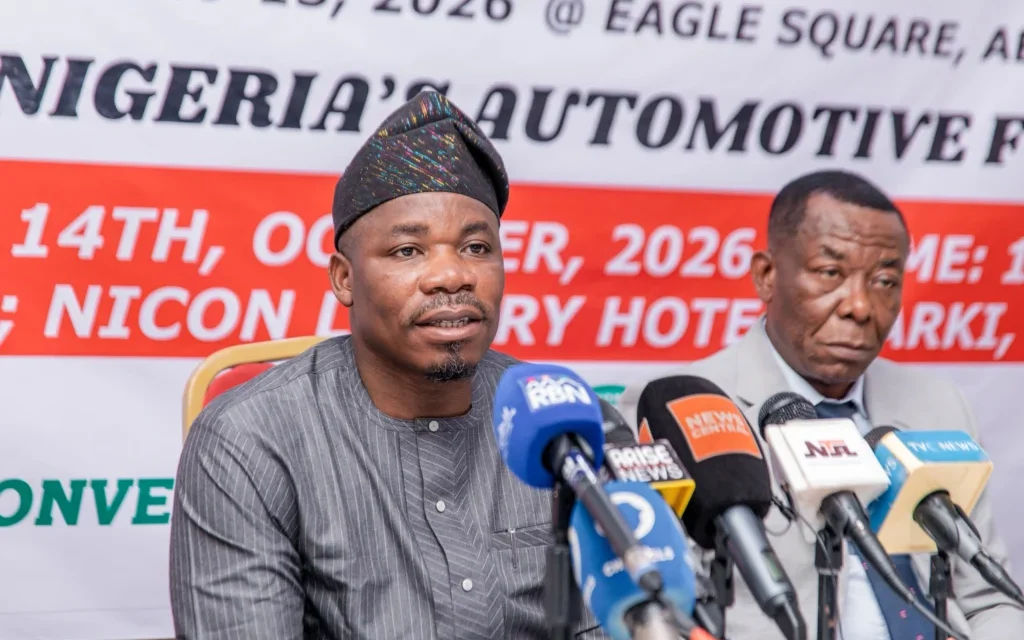
Osanipin stated this on Wednesday in Abuja at a joint information convention with BKG Exhibitions Ltd as a part of actions to herald the twenty sixth Abuja International Motor Fair.
He stated the honest with the theme: “Driving Nigeria’s Automotive Future,” will maintain from Nov. 10 to 13 at Eagle Square, Abuja.
“The future of our automotive industry must not be defined solely by the vehicles we import, but increasingly by what we design, manufacture, assemble and develop,” he stated.
According to him, the trade provides Nigeria alternatives to diversify the financial system, preserve international change, create jobs and strengthen indigenous manufacturing.
“A strong automotive industry cannot depend on vehicle assembly alone, hence, the need for local suppliers of components, spare parts and accessories,” he stated.
Osanipin stated NADDC’s priorities included native content material improvement, help for meeting and part manufacturing, analysis, technical capability constructing and funding in rising automotive applied sciences.
He stated the council was getting ready Nigeria for electrical mobility, various fuels and battery know-how, including that CNG remained an necessary alternative for inexpensive and environment friendly mobility.
The D-G stated CNG options have to be backed by security requirements, technical coaching, high quality assurance and public schooling.
On expertise, he stated: “our young people must not remain spectators in the transformation of the global automotive industry.
“They should be equipped as technicians, engineers, innovators, manufacturers and business leaders.
“Thus, industry players should ensure to explore partnerships, internships and knowledge transfer at the fair.”
Osanipin additionally careworn the necessity for high quality, security and client safety, saying dependable merchandise, certified personnel and accountable after-sales help had been important to public confidence in Nigerian-made and assembled autos.
He urged producers, assemblers, monetary establishments and know-how corporations to discover funding in car meeting, part manufacturing, after-sales companies and automotive know-how.
According to the D-G, the honest is anticipated to strengthen engagement between native producers and worldwide manufacturers, promote native content material and create alternatives for small and medium-sized enterprises.
“Nigeria has the potential to become a stronger automotive manufacturing and mobility hub in Africa and this will require deliberate investment and sustained collaboration,” he stated.
He recommended BKG Exhibitions Ltd for its partnership and urged the media to report the achievements of Nigerian producers, assemblers and innovators responsibly.
“Together, let us transform conversations into commitments, into partnerships, and partnerships into measurable industrial progress,” he stated.
Also talking, the Chairman of BKG Exhibitions Ltd, Mr Ifeanyichukwu Agwu, stated the automotive trade was about industrialisation, know-how, mobility, jobs and nationwide pleasure, not simply autos.
“When a nation builds a strong automobile industry, it does not build only vehicles. It builds industries around industries,” he stated.
He stated the sector spanned parts, expertise and companies, from metal, rubber and batteries to finance, insurance coverage, logistics and repairs.
Agwu stated the honest was positioned as a nationwide automotive market and a platform for coverage engagement.
He stated it could deliver collectively producers, assemblers, distributors, part producers, monetary establishments, fleet house owners, state governments and buyers.
He recommended NADDC and its director-general for management, saying the partnership between NADDC and BKG was not ceremonial.
Agwu stated Nigeria couldn’t industrialise by importing every little thing it consumed stressing that authorities, non-public corporations and exhibition organisers should work collectively. (NAN)
Edited by Ese E. Ekama-Williams
.