
For greater than twenty years, Nigeria has pursued renewable power as a part of the answer to its electrical energy disaster.
The Nigerian Electricity Regulatory Commission (NERC) reported that the common provide from grid-connected energy crops was about 5,400MW in the fourth quarter of 2025, whereas World Bank data put the entry charge at 62.5 per cent in 2024.
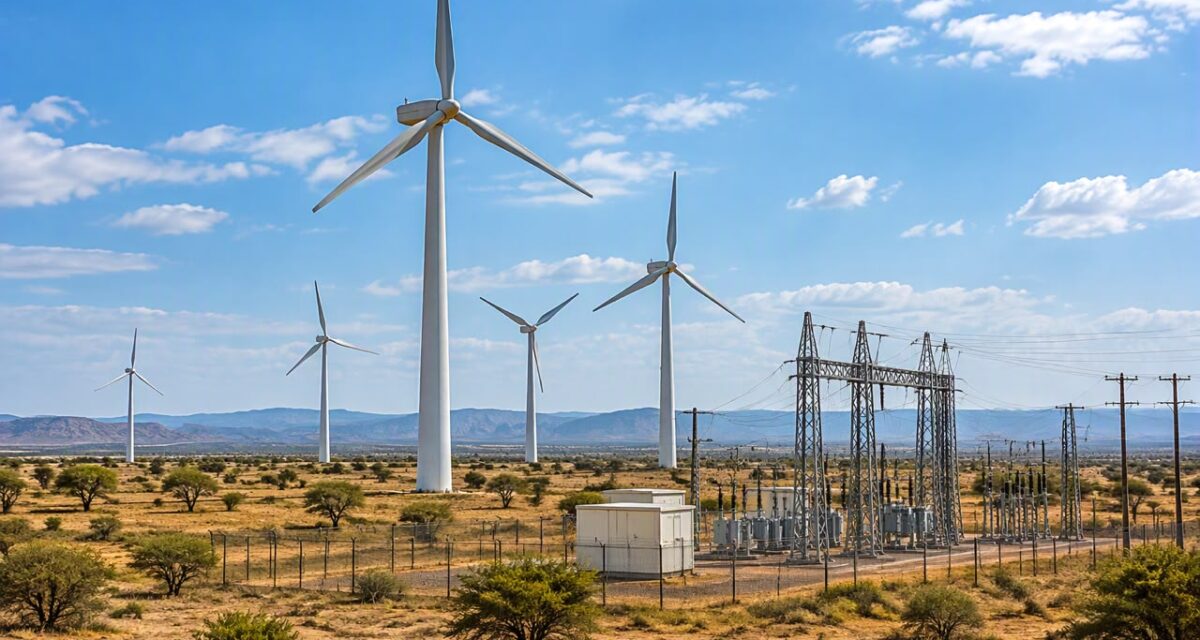
Authorities have tried to develop energy era by means of photo voltaic and wind initiatives. However, the 10MW Lambar-Rimi wind farm project in Katsina State reveals how tough it has been for the nation to flip plans into functioning energy belongings.
Lambar-Rimi wind farm
The Katsina State Government began the project in 2005. Since then, the power has modified possession twice, the primary time in 2007 when it was taken over by the federal authorities.
After the takeover, the federal authorities awarded a contract in 2010 to a French firm, Vergnet S.A., to build the wind farm inside 24 months. The farm would have 37 generators, every to ship about 275 kilowatts of electrical energy. The contract included offshore elements valued at €18.5 million and onshore elements valued at N494 million.
Safe to say the project didn’t go in accordance to plan.

The project encountered a number of setbacks in a state dealing with extreme safety challenges. Following the abduction of a French commissioning engineer, the corporate obtained approval to switch elements of the work to a neighborhood contractor, Credco Nigeria Limited.
The revised association increased the contract to €20.85 million offshore and N573.90 million onshore.
By 2016, a authorities budget implementation report acknowledged the progress made in the project to embrace the supply of two 7.5MVA transformers, restoration of a vandalised 33kV line, completion of basis work, set up of towers and generators, and building of medium-voltage rooms.
It stated excellent works included the overhead line linking the wind farm to the 33kV community and an injection substation at Liyafa.
The 2017 authorities funds implementation report later described the project as about 95 per cent full.
However, six years later, in 2023, Kano Electricity Distribution Company (KEDCO), the designated off-taker of energy from the wind farm, described the wind farm as solely 80 per cent full.
In an article published on 31 August 2026, the Nigerian Wind Energy Council (NWEC) stated years of inactivity had left the Lambar-Rimi wind farm’s generators degraded and in want of in depth rehabilitation.
New Twist

In April 2025, the Katsina State Government requested to reacquire the power. The federal authorities approved the switch, with the Minister of Power, Adebayo Adelabu, explaining that it was in line with the Electricity Act 2023 and the rising position of states in the electrical energy markets.
In September 2025, Katsina announced the reacquisition of the wind farm and its plans to hybridise it with a 10MW photo voltaic plant.
The state has since stated it was working with Vergnet to assess the generators, electrical methods, and grid infrastructure. The state authorities expects the hybrid facility to come on stream in the fourth quarter of 2026.
The twists and turns in the Lambar-Rimi wind farm story exhibit how Nigeria has struggled to produce and distribute sufficient electrical energy for its 240 million individuals.
PREMIUM TIMES despatched a number of calls and messages to the Special Adviser on Power and Energy to the Katsina State Governor, Abubakar Ibrahim, searching for particulars of the present standing of the power, the funds dedicated and whether or not progress had been made in the direction of the deliberate commissioning. The officers didn’t reply to the inquiry.
PREMIUM TIMES additionally made a number of makes an attempt to attain officers on the Federal Ministry of Power for clarification on why the project has not been accomplished in over 15 years.
The calls weren’t answered, and the ministry didn’t reply to the textual content messages both.
Lambar-Rimi not alone
Many different massive renewable-energy initiatives in Nigeria have remained at totally different levels of improvement for years.
They embrace the 100MW Maraban Pushit wind farm in Mangu Local Government Area of Plateau State, promoted by JBS Wind Power Limited.
A World Bank project document information that the corporate had secured a 45-year land lease, performed environmental affect evaluation research and obtained provisional approval to evacuate electrical energy by means of a 132kV substation at Makeri in Plateau State.
The project appeared in regulatory information in October 2012, 14 years in the past, however has not developed into an working utility-scale wind farm. Publicly out there information reviewed for this report didn’t set up how a lot has been spent on the project or whether or not public funds had been dedicated.
Solar initiatives in Nigeria have a equally blended observe file.
The 50MW Onyi project in Kokona, Nasarawa State, related with Afrinergia Power Limited, acquired a era licence in April 2016. Global Energy Monitor lists the project as cancelled, inferring cancellation occurred in June 2024.
A 75 MW Kankia photo voltaic project in Katsina State was promoted by Pan Africa Solar Limited, with JCM Capital listed because the project proprietor. The Nation newspaper reported in July 2016 that the corporate and the federal authorities had signed an influence buy settlement for the project, with a proposed funding of $146 million.
NERC information show that Pan Africa Solar acquired a era licence in December 2014, which expired in December 2024. The regulator lists the project as non-operational, whereas Global Energy Monitor classifies it as cancelled, with cancellation inferred to have occurred in February 2025.
However, regardless of the dearth of success in some renewable power initiatives, others have been efficiently accomplished. A 10MW photo voltaic project in Kumbotso, Kano State, developed by the Nigeria Sovereign Investment Authority (NSIA), was commissioned in 2023. This project reveals that utility-scale renewable initiatives might be delivered when financing, project administration, evacuation infrastructure, and an identifiable market align.
A project shouldn’t be an ecosystem
In an interview with PREMIUM TIMES, NWEC’s Research and Operations Consultant, Ojodomo Odiniya, famous that Nigeria lacks an ecosystem able to turning energy assets into bankable initiatives.
He recognized coverage and regulatory uncertainty, grid constraints, financing, insufficient wind-resource knowledge, weak institutional coordination, and land and neighborhood points as main limitations.
Investors, he stated, want a predictable pathway from useful resource evaluation and land acquisition by means of allowing, procurement, financing, energy buy agreements, grid connection and long-term operation.
Mr Odiniya prescribed a scientific improvement of the sector. He stated this might additionally start with localising components of the renewable-energy worth chain as a substitute of making an attempt to manufacture a whole wind turbine instantly.
He stated foundations, civil works, tower fabrication, electrical set up, transportation, engineering, operations, and upkeep may present entry factors for Nigerian corporations.
“The point is not to begin with a fully Nigerian-made turbine. It is to ensure that each project creates capabilities that can be used by the next project,” he stated.
The guide additionally warned towards growing era with out the transmission infrastructure required to evacuate it.
For future wind initiatives, Mr Odiniya stated web site choice ought to contemplate not solely wind power but additionally grid entry, logistics, safety, land and lifelong working prices.
Egypt constructed system round initiatives

North African financial powerhouse, Egypt, reveals what occurs when initiatives are developed alongside the establishments and infrastructure required to help them.
In written responses to questions from PREMIUM TIMES in September, Jauad El Kharraz, senior advisor to the TERAMED Initiative and former govt director of the Regional Centre for Renewable Energy and Energy Efficiency, stated Egypt’s enlargement adopted a sequence of institutional selections that decreased uncertainty for buyers.
Egypt’s Electricity Law, Law No. 87 of 2015, offered a framework for the nation’s electrical energy market and allowed higher participation by personal turbines.
Egypt had additionally introduced a separate Renewable Energy Law, Law No. 203 of 2014, which established mechanisms for growing renewable-energy initiatives.
The nation first used feed-in tariffs to encourage personal funding in renewable power and develop initiatives such because the Benban photo voltaic park.
It subsequently moved in the direction of aggressive auctions and build-own-operate preparations because the market matured. Egypt’s New and Renewable Energy Authority (NREA) lists feed-in tariffs, aggressive auctions, build-own-operate initiatives, and impartial energy producer preparations among the many mechanisms used to develop renewable-energy initiatives.
That development mattered as a result of builders weren’t merely being requested to build renewable crops. They had been being given a clearer framework for a way electrical energy can be bought and the way funding might be recovered.
The Benban expertise illustrates the impact.
The European Bank for Reconstruction and Development (EBRD) says it invested greater than $1.1 billion in 16 photovoltaic crops at Benban, with a mixed capability of 750MW.
The crops had been related to Egypt’s nationwide electrical energy grid in 2019. The financial institution additionally supported Egypt’s transfer from feed-in tariffs in the direction of aggressive renewable-energy auctions.
Mr El Kharraz stated Egypt additionally addressed among the infrastructure issues earlier than they may grow to be bottlenecks.
The New and Renewable Energy Authority, he stated, helped make land out there in resource-rich areas, whereas the federal government invested closely in transmission.
According to figures he offered, Egypt’s 500-kilovolt transmission traces elevated from 2,364 kilometres in 2014 to 8,250 kilometres by late 2024, whereas substation capability elevated to about 48,000 megavolt-amperes (MVA).
The lesson for Nigeria is {that a} renewable-energy project can’t be handled as an remoted producing asset. The land, transmission system, energy purchaser, financing construction, approvals and upkeep preparations should develop round it.
Egypt’s mannequin additionally relied closely on improvement finance.
EBRD financing helped set up the Benban pipeline, whereas the financial institution labored with Egyptian authorities on the design and implementation of aggressive renewable-energy tenders.
Mr El Kharraz stated Egypt used sovereign-backed preparations, standardised contracts, risk-sharing mechanisms and development-finance establishments to scale back the dangers personal buyers confronted.
He stated a few of these institutional rules might be tailored to Nigeria, together with standardised bankable energy buy agreements (PPAs), clean-energy corridors with ready land and grid connections, and extra coordinated allowing.
A Nigerian mannequin
For Nigeria, the reply shouldn’t be to copy Egypt’s mannequin wholesale.
Tobi Oluwatola, affiliate companion at AP3 Advisory, famous that Egypt’s massive, centralised renewable-energy parks developed inside a unique electricity-market construction. Nigeria, against this, has more and more relied on business and industrial initiatives, mini-grids, and different decentralised methods.
He stated Nigeria wants contracts that give buyers the arrogance that electrical energy will probably be bought, that there are credible patrons able to paying for the ability, and transmission infrastructure and mechanisms for managing foreign-exchange and different dangers.
Mr Oluwatola stated Nigeria may adapt parts of the Egyptian expertise, together with pre-permitted renewable-energy zones, standardised power-purchase preparations and local-content necessities tied to public procurement.
The frequent lesson from each consultants is {that a} renewable-energy project can’t be handled as an remoted producing plant.
Land, financing, contracts, transmission, regulation, and the electrical energy market have to develop round it.
The tools drawback
Segun Ajayi-Kadir, director-general of the Manufacturers Association of Nigeria (MAN), advised PREMIUM TIMES that Nigerian corporations can produce or assemble some renewable-energy tools, together with photo voltaic panels, mounting buildings, cables and battery packs.
However, specialised applied sciences and a number of other vital inputs stay closely depending on imports.
Government figures cited by officers put Nigeria’s photo voltaic expertise import invoice at greater than N400 billion in 2025 and greater than N200 billion in the primary half of 2026.
Mr Ajayi-Kadir stated producers face excessive financing prices, foreign-exchange instability, costly and unreliable electrical energy, infrastructure gaps, expertise shortages, and uncertainty over demand.
This creates a round drawback.
Manufacturers are reluctant to make investments closely with out predictable demand, whereas renewable-energy builders typically flip to imported tools as a result of native suppliers can not but present ample scale, expertise, or aggressive pricing.
The authorities’s Distributed Access by means of Renewable Energy Scale-up (DARES) programme may assist break that cycle by creating predictable demand.
The programme targets electrical energy entry for greater than 17.5 million Nigerians by means of 1000’s of connections and mini-grids.
Another instance is the proposed Solarge Nigeria Limited photo voltaic manufacturing facility, established by the Rural Electrification Agency (REA), Infrastructure Corporation of Nigeria (InfraCorp) and Dutch firm Solarge BV.
The proposed facility is designed to hyperlink manufacturing to a assured market, with plans for local-content progress and procurement commitments.
READ ALSO: Reps move to establish national authority for renewable energy, pass bill for second reading
Mr Ajayi-Kadir stated localisation ought to however be gradual.
Nigeria, he stated, can start with solar-module meeting, mounting buildings, cables, battery packs and different balance-of-system elements earlier than shifting into extra subtle applied sciences.
For wind, speedy alternatives are extra seemingly to lie in metal towers, foundations, electrical set up, engineering and upkeep than in manufacturing full generators.
DARES programme potential
The authorities’s Distributed Access by means of Renewable Energy Scale-up (DARES) programme may assist break that cycle by creating predictable demand.
The programme targets electrical energy entry for greater than 17.5 million Nigerians by means of 1000’s of connections and mini-grids.
Another instance is the proposed Solarge Nigeria Limited photo voltaic manufacturing facility, established by the Rural Electrification Agency (REA), Infrastructure Corporation of Nigeria (InfraCorp) and Dutch firm Solarge BV.
The proposed facility is designed to hyperlink manufacturing to a assured market, with plans for local-content progress and procurement commitments.
Discover extra from Premium Times Nigeria
Subscribe to get the most recent posts despatched to your e mail.