
By Erasmus Ikhide
The visible and olfactory tragedy of a Mega-City
No customer arriving in Lagos can presumably miss its gorgeous, breathtaking neglect. Traffic chaos was as soon as thought of its second nature, an unlucky product of its frantic geographic growth and sprawling inhabitants.
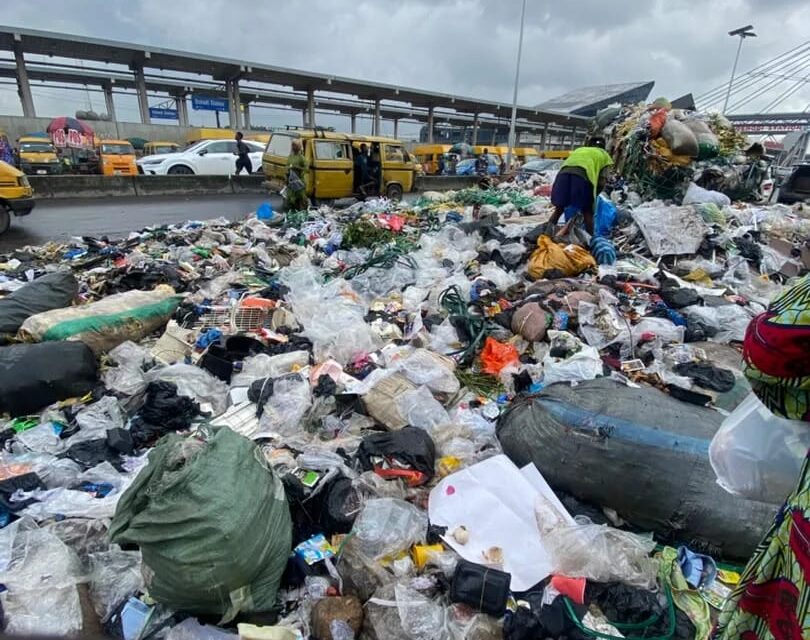
However, this infamous gridlock has now been violently overtaken by a much more pervasive and nauseating illness: the proliferation of indiscriminate waste dumps festering throughout the metropolis with out well timed or systematic evacuation.
From Badagry to Mile 2, from Mile 2 right down to Orile, stretching throughout the congested veins of Iyana Iba to Egbeda, and from Oshodi right down to Agbado-Ijaye, the panorama bears the deep scars of environmental abandonment.
Both the mainland and Lagos Island—most notably historic, high-density business hubs like Idumota, Akpongbon, and their claustrophobic environs—have systematically devolved into monumental environmental disasters as a result of of unmitigated, indiscriminate waste dumping.
You can be genuinely shocked at how soiled these areas have grow to be. All sides of the roads, the medians, and the once-functional drainage channels are littered, choked, and buried underneath industrial and home refuse.
Other prime places equivalent to Lekki and Victoria Island could also be much less littered on the floor, however even their major thoroughfares cry out for pressing consideration and structural upkeep.
If you juxtapose what is going on on this self-proclaimed “Centre of Excellence” with the visionary, monumental growth strides of the Lateef Jakande years, one is certain to confront agonizing, existential questions: Is Lagos truly working? What is going on to our native governments? Why can’t they evacuate primary waste? Above all, is somebody nonetheless presiding over the state authorities?
The Golden Benchmark: The Jakande Era vs. Present Ruin
To perceive the depth of our present desolation, one should revisit the historic governance benchmark set by Alhaji Lateef Jakande throughout his administration as governor of Lagos State from 1979 to 1983. The inhabitants of Lagos was already rising quickly on the time, which overstretched obtainable infrastructure as public faculties have been severely congested.
Instead of providing limitless excuses or commissioning superficial media occasions, the Jakande administration revolutionized public schooling by constructing lots of of inexpensive major and secondary faculties to abolish the disturbing and dehumanizing morning and afternoon shift methods.
His authorities constructed hundreds of useful, low-cost lecture rooms grouped into main neighborhood faculties and complexes throughout native authorities areas like Mushin, Agege, Ipaja, Apapa, and Epe. Notable legacy academic hubs established throughout this era embody, the distinguished Tolu Schools Complex in Ajeromi-Ifelodun, the Amuwo-Odofin Schools Complex, the Okota Schools Complex and the Odu Abore Primary School in Mushin.
Furthermore, Jakande’s administration established General Hospital zones all around the state with the agency assurance of free healthcare for the populace. In a testomony to his unmatched administrative imaginative and prescient, his authorities constructed extra libraries in Lagos State than all of the governors mixed since 1999, and he made historical past as the primary governor to current a billion-naira state funds in Nigeria.
In increased and technical schooling, his administration based Lagos State University (LASU) to supply increased studying alternatives for Lagos residents. He relocated and expanded the Lagos State College of Education (LACOED/now Adeniran Ogunsanya College of Education) to coach skilled academics, and based Lagos State Polytechnic (LASPOTECH) to spice up technical and vocational manpower throughout the federation.
Dedicated instructor coaching schools and technical faculties have been additionally arrange throughout totally different divisions to quickly provide certified educators and expert employees.
Institutional Decay and Administrative Inertia
Today, the distinction between that golden period of purpose-driven management and the present dispensation underneath Governor Babajide Sanwo-Olu is stark, painful, and profoundly embarrassing.
Established secondary faculties and tertiary establishments—together with Lagos State University as its flagship, a number of housing estates in isolation (equivalent to Agbado-Ijaiye and Agege-Abesan), and significant arterial roads—are languishing in terminal neglect.
Even although previous establishments just like the College of Education and Lagos Polytechnic have been administratively upgraded into full-fledged universities (particularly, the Lagos State University of Education [LASUED] and the Lagos State University of Science and Technology [LASPOTECH]), the overarching bodily setting and structural upkeep have deteriorated sharply.
Local authorities councils have been rendered toothless, structurally emasculated, and utterly incapacitated. Why can’t they evacuate waste? Why are our business nerve facilities buried underneath decomposing refuse? Why has a state blessed with immense internally generated income degenerated right into a monument of administrative inertia?
Governance Failure: Sanitation, Infrastructure, and Grassroots Paralysis
When an city centre of international significance collapses underneath the burden of its personal refuse, the failure is neither unintentional nor transient; it’s structural and systemic. The core disaster of up to date Lagos lies within the systematic dismantling of native governance buildings.
In any useful federation, the native authorities tier is uniquely positioned to deal with localized sanitation, tenement administration, and neighborhood-level waste assortment. Yet, underneath the current administration, native councils have been decreased to mere administrative ciphers, financially emasculated and stripped of the autonomy required to maintain their communities clear.
Private Sector Participation (PSP) waste administration operators battle underneath crippling bureaucratic bottlenecks, delayed subsidies, and an absence of infrastructural backing. The Lagos State Waste Management Authority (LAWMA) has confirmed largely incapable of assembly the refuse disposal calls for of a surging mega-city inhabitants.
Consequently, main highways, secondary roads, and road corners have been transformed into unauthorized, everlasting waste dumps. This environmental degradation instantly threatens public well being. Rainwater washes poisonous leachate from these rotting refuse heaps instantly into open drainage channels, polluting the lagoon, contaminating the water desk, and exposing hundreds of thousands of residents to preventable waterborne and airborne illnesses. It is a slow-motion public well being emergency taking place in broad daylight.
The Contrast of Priorities: Substance vs. Spectacle
Governance should be measured by the tangible high quality of life it delivers to the bizarre citizen, not by flashy billboards, high-sounding slogans, or stage-managed media commissioning ceremonies.
When faculty kids in Agege and Ipaja should wade by flooded, waste-clogged gutters to succeed in crumbling lecture rooms with leaking roofs, the promise of a “Smart City” is revealed as a merciless phantasm. When merchants in Idumota and Akpongbon conduct their every day commerce surrounded by towering mountains of rubbish, the state authorities’s claims of financial excellence ring hole.
Jakande’s administration proved that with self-discipline, prudent useful resource administration, and profound empathy for the widespread man, monumental challenges could possibly be overcome inside a brief span of 4 years. He didn’t construct his legacy on empty media optics; he constructed it on enduring bodily infrastructure, sturdy establishments, and a real dedication to public welfare.
Deepening the Critique: Urban Planning and Social Neglect
The regression of Lagos is additional mirrored within the state of its mass housing tasks. During the Second Republic, Jakande’s administration constructed over 30,000 low-cost housing items throughout various places—together with Ijaiye, Dolphin, Oke-Afa, Abesan, Amuwo-Odofin, Ipaja, and Iba.
These communities have been designed to supply shelter and dignity to low-income earners, civil servants, and the working class. Today, many of these identical housing estates are stricken by infrastructural decay, failing sewage methods, unpaved inner roads, and encroaching business shanties.
The disconnect between the ruling elite in Alausa and the on a regular basis realities of bizarre Lagosians has by no means been wider. While billions are funneled into elite ego massaging beautification tasks, densely populated settlements on the mainland are left to rot in filth.
The failure to take care of primary public infrastructure—starting from public libraries to well being facilities and technical faculties—has created an setting the place youth unemployment, social despair, and concrete decay thrive unchecked.
Reinventing the Centre of Excellence
Lagos State stands at a crucial historic crossroads. It stays the simple business heartbeat of West Africa and a monetary engine room that the remainder of the continent seems to be as much as.
It can not proceed to wallow because the capital of filth, structural decay, and administrative indifference.
Governor Babajide Sanwo-Olu should be known as to order. The present environmental tragedy is an simple indictment of government functionality.
The state requires a direct, complete, and aggressive overhaul of its waste administration structure, the total restoration of true native authorities monetary and operational autonomy, and a return to the disciplined, people-centric philosophy of governance exemplified by Alhaji Lateef Jakande.
The City of Excellence deserves true management, rigorous city planning, and environmental dignity. History is watching, and the judgment of the folks shall be unsparing.
*Erasmus Ikhide contributed this piece by way of: ikhideluckyerasmus@gmail.com
Tell: +2348035032123. WhatsApp solely.