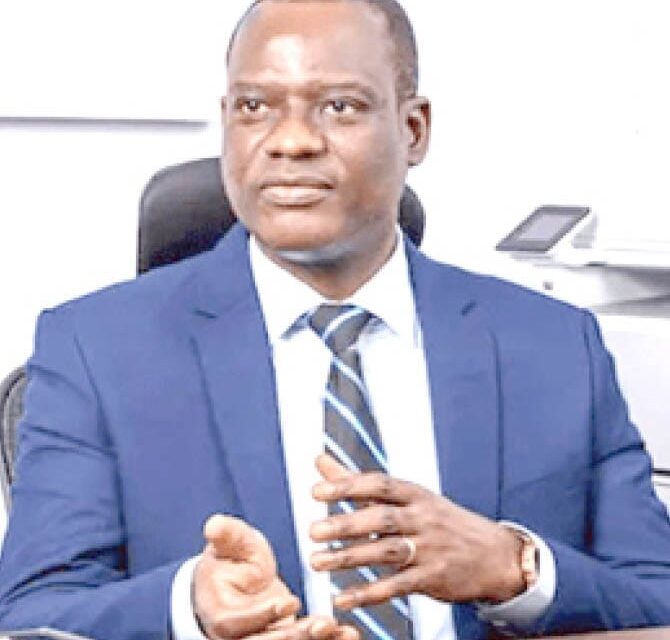

Minister of Finance and Coordinating Minister of the Economy, Taiwo Oyedele, has declared that that is the flawed time for governments to impose new taxes or enhance the tax burden on weak folks and productive sectors of the financial system.
Oyedele spoke on the sidelines of the 2026 annual conferences of the International Monetary Fund (IMF) and the World Bank in Bangkok, Thailand, the place he offered the communiqué of the Intergovernmental Group of Twenty-Four (G24).
According to him, governments ought to stability income mobilisation with the want to defend weak populations from extra monetary strain.
“This is the wrong time to impose new taxes or increase the tax burden, particularly on vulnerable populations and productive sectors of the economy,” Oyedele stated.
Responding to a query on how growing nations may cut back debt-servicing prices with out slicing important public spending, the minister stated governments ought to look inward for financial savings and enhance income mobilisation with out imposing extra burdens on residents and companies.
“The measures, as you asked, would first involve every country looking inward to identify areas for savings and revenue mobilisation, while bearing in mind that this is the wrong time to impose new taxes or increase the tax burden, particularly on vulnerable populations and productive sectors of the economy,” he stated.
Oyedele stated borrowing remained vital for financial development however pressured that it ought to be used to assist job creation and inclusive growth.
“Borrowing and debt financing are necessary conditions for growth, and every emerging and developing country must be able to use debt financing in a way that has an overall positive impact, particularly by stimulating job-rich and inclusive growth,” he stated.
He additionally stated public financing, which is commonly constrained, ought to be directed in direction of important companies comparable to healthcare and training, whereas personal capital may assist meet different funding wants.
On the stability between taxation and borrowing, Oyedele stated neither possibility ought to be thought of in isolation.
“If you collect taxes, you raise the money now, and that itself has a lot of trade-offs. What taxes are you collecting? If you collect taxes from the most vulnerable, you deprive them of money to provide food, healthcare and education,” he stated.
According to Oyedele, “debt is future taxes, so it’s not one or the other. It’s about striking a balance, bearing in mind that, ultimately, the purpose of taxation and borrowing is to cater for the people.”
Daily Trust stories that the assembly is holding from October 12 to October 18, 2026. It is being attended by delegations from over 190 nations.
The Nigeria delegation embrace Chief Executive Officers of economic establishments, representatives of the personal sector, Civil Society Organisations, Non-Governmental Organisations and different stakeholders.
The assembly, aimed toward selling international macro-economic monetary stability alongside IMF’s long-standing mission, offers coverage recommendation, surveillance of member nations’ economies, and monetary help to nations going through balance-of-payments points.
UPDATE NEWS:
Nigerians can now make investments ₦2.5 million on premium domains and revenue about ₦17-₦25 million. All earnings paid in US Dollars. Rather than surprise,
click here to find out how it works.