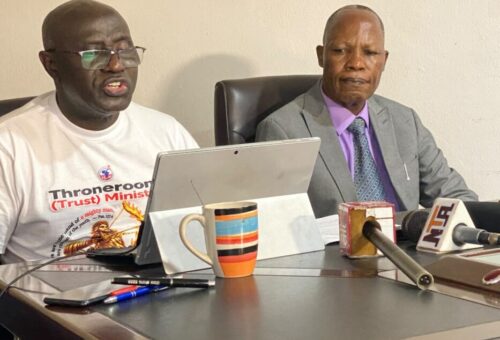
Director-General of City Boy Movement, Hon. Oluwatosin Shoga, on this interview, defends President Bola Tinubu’s financial reforms, saying his authorities is correcting a number of years of structural distortions and laying a strong basis for Nigeria’s emergence as a $1 trillion financial system. He additionally speaks about Nigeria’s rising overseas reserves, proposed Gateway Deep Seaport and elevated revenues to state and native governments. Folalumi Alaran brings excerpts.
States and native governments are actually receiving greater allocations. What ought to Nigerians count on from them?
This is a vital side of President Bola Tinubu’s reforms that deserves higher consideration. By July 2026, month-to-month federation revenues accessible for distribution had risen to round N3 trillion. That means extra assets can be found to states and native governments for infrastructure and public providers.
Governors and council chairmen should subsequently take duty for delivering seen enhancements in faculties, healthcare, rural roads, water provide and agricultural improvement. It could be unfair to attribute each issue in native communities solely to the President when subnational governments now have higher assets and constitutional duties.
President Tinubu is creating further fiscal alternatives. States and native governments should reveal what they’re doing with them. Citizens deserve accountability at each stage.
How can the administration be sure that improvement reaches each geopolitical zone?
President Tinubu’s imaginative and prescient have to be understood as a nationwide improvement agenda. Every zone possesses financial benefits. The North-Central has agriculture, minerals and logistics; the North-East has livestock, agriculture and cross-border commerce; whereas the North-West has textiles, leather-based and meals processing.
The South-East possesses formidable entrepreneurial and manufacturing capability. The South-South provides petroleum, fuel, petrochemicals and maritime industries, whereas the South-West stays robust in finance, manufacturing, know-how and aviation.
The administration’s problem is connecting these strengths by means of transportation, electrical energy, industrial infrastructure and digital improvement. A genuinely affluent Nigeria can not go away any geopolitical zone behind.
You are keen about President Tinubu’s financial achievements, but thousands and thousands of Nigerians are struggling. How do you reconcile this?
We have to be truthful to President Tinubu and trustworthy in regards to the situation of the financial system he inherited. Nobody disputes that Nigerians have skilled hardship. Fuel costs elevated, transportation turned costlier, meals costs rose and family buying energy suffered.
But the elemental query is whether or not Nigeria might have continued indefinitely with the financial preparations that created these issues.
President Tinubu inherited an financial system burdened by unsustainable gasoline subsidies, distorted foreign-exchange preparations, weak authorities revenues, huge debt-servicing obligations and infrastructure deficiencies. These weren’t issues created in a single day, and so they couldn’t be solved by means of political comfort. What distinguishes President Tinubu is his willingness to confront challenges that had been postponed for years. Leadership generally calls for taking tough selections as we speak to stop a a lot greater disaster tomorrow.
The encouraging improvement is that the reforms are starting to provide measurable outcomes. Our duty now’s to make sure these positive aspects translate into jobs, inexpensive transportation, stronger companies and improved residing circumstances.
What concrete proof helps your declare that the financial system is recovering?
The figures are more and more talking for themselves. Nigeria’s actual Gross Domestic Product grew by 4.43 per cent within the second quarter of 2026, in contrast with 4.23 per cent within the corresponding interval of 2025. That represents progress in an financial system present process substantial structural adjustment.
We are seeing enhancements in income mobilisation, overseas reserves, home refining and funding alternatives. Critics ought to acknowledge that these developments are occurring as a result of the administration selected reform over the short-term consolation of sustaining an unsustainable system.
Of course, GDP progress alone is inadequate. But you can not create sustainable prosperity with out first constructing a productive and steady financial system. President Tinubu is laying that basis, and the subsequent process is translating progress into employment, industrial growth and stronger buying energy.
Why does the Dangote Refinery characteristic so prominently in your evaluation?
Because it illustrates the commercial transformation Nigeria desperately wants. For many years, we produced crude oil, exported it and spent huge overseas change importing refined petroleum merchandise. That was an financial contradiction which disadvantaged Nigeria of business alternatives and employment. Today, the Dangote Petroleum Refinery is altering that narrative.
Seaborne petroleum-product shipments from Nigeria averaged roughly 561,000 barrels every day within the second quarter of 2026, with about 350,000 barrels going into exports. Consider what which means for a rustic beforehand closely depending on imported petroleum merchandise. Beyond refining, the alternatives prolong to transport, storage, engineering, petrochemicals, transportation, logistics and hundreds of related companies.
President Tinubu’s imaginative and prescient of financial diversification is about creating an setting the place Nigeria more and more processes what it produces and exports completed merchandise quite than uncooked supplies. That is how severe economies develop.
But Dangote Refinery is a personal funding. Why ought to the administration obtain credit score?
Nobody is suggesting that authorities constructed or financed the refinery. Credit belongs to the entrepreneur who conceived and invested in it. However, no main industrial enterprise operates outdoors the coverage setting created by authorities.
Crude provide preparations, foreign-exchange coverage, the naira-for-crude framework, regulatory selections and infrastructure assist all matter.
President Tinubu understands that authorities doesn’t must personal each manufacturing unit to drive industrialisation. Its duty is to create circumstances that encourage buyers to commit capital, broaden manufacturing and generate employment. That partnership between authorities and personal enterprise is exactly what Nigeria requires.
You have additionally highlighted the proposed Gateway Deep Seaport in Ogun State. Why is it notably vital?
Because it demonstrates the large funding alternatives that may emerge when authorities insurance policies encourage productive partnerships. In September, Ogun State signed agreements with DP World for the proposed Gateway Deep Seaport and Blue Marine Special Economic Zone. The envisaged funding exceeds $7 billion, together with a ten,000-hectare financial zone designed to accommodate manufacturing, logistics and export-oriented industries.
The proposed port is predicted to have roughly 4 kilometres of berth and an 18-metre draft, with projections of greater than 50,000 direct jobs at full improvement. These are substantial financial alternatives.
What President Tinubu’s administration is encouraging is a improvement mannequin through which federal and state governments cooperate with credible worldwide buyers to broaden Nigeria’s productive capability. Of course, agreements should translate into building and accomplished infrastructure. That is the subsequent vital duty.
There can be a separate Dangote-backed proposal round Olokola. How do the tasks relate?
Publicly accessible info signifies that Dangote Industries is pursuing a proposed deep seaport and industrial improvement overlaying greater than 10,000 hectares inside the Olokola Free Trade Zone hall. There can be the Gateway venture involving Ogun State and DP World.
Whether these ultimately turn into separate services or elements of an built-in maritime improvement stays to be established. But take a look at the larger image. Ogun is already considered one of Nigeria’s strongest manufacturing centres. Providing trendy maritime infrastructure alongside that shoreline might basically strengthen its industrial competitiveness. That is the type of investment-led transformation President Tinubu needs throughout Nigeria.
How would a contemporary deep seaport profit the nationwide financial system?
A seaport shouldn’t be merely a spot the place vessels discharge cargo. It is an engine of financial improvement. Major ports appeal to industries, warehouses, logistics firms, monetary establishments, transport companies and industrial actions.
Ogun already hosts important investments in cement, prescribed drugs, metal, meals processing, packaging and shopper merchandise. Many of these producers at present rely on Lagos ports.
Modern maritime services in Ogun might cut back logistics prices, enhance entry to manufacturing inputs, broaden exports and relieve stress on Apapa and Tin Can ports. The vital level is that President Tinubu’s financial agenda recognises infrastructure as a catalyst for manufacturing, competitiveness and employment. Nigeria can not turn into an industrial powerhouse whereas producers battle with avoidable logistics bottlenecks.
How does the proposed maritime hall join with the administration’s $1 trillion financial system ambition?
President Tinubu’s $1 trillion financial system ambition shouldn’t be merely a political slogan. It represents a imaginative and prescient of a extra productive, diversified and aggressive Nigeria. But such an financial system can not emerge with out dependable infrastructure. We want trendy ports, railways, roads, electrical energy, industrial estates and environment friendly monetary methods.
Imagine Nigerian producers exporting straight by means of trendy maritime services, agricultural merchandise from northern states reaching worldwide markets and strong minerals being processed domestically earlier than export. That is how worth is created.
The Gateway Inland Dry Port at Kajola, proposed Ijebu-Ode Inland Dry Port, Lagos-Ibadan railway, Lagos-Calabar Coastal Highway and Gateway International Agro-Cargo Airport might turn into vital components of an built-in logistics community. The administration’s ambition have to be supported by this type of productive infrastructure.
What distinction would these investments make to agriculture and farmers outdoors Ogun State?
This is the place the broader financial advantages turn into apparent. Nigeria produces cocoa, sesame, cashew, rubber, fruit and veggies with substantial worldwide demand. But insufficient storage, processing services, transportation and export infrastructure incessantly restrict farmers’ earnings.
Modern ports related to warehouses, cold-storage services, processing centres and environment friendly transportation networks can open worldwide markets to agricultural companies. More importantly, we should cease exporting a lot of our agricultural wealth in uncooked type. Why export uncooked cocoa or cashew when processing them domestically creates further jobs and earnings?
President Tinubu’s financial diversification agenda provides a possibility to attach agriculture with manufacturing and worldwide commerce. That is how farmers throughout totally different geopolitical zones can take part in nationwide prosperity.
Nigeria’s overseas reserves have reportedly exceeded $54 billion. Why is that important?
It is likely one of the encouraging indicators of the administration’s financial administration. External reserves exceeding $54 billion present higher safety in opposition to worldwide shocks, strengthen Nigeria’s capability to fulfill exterior obligations and might enhance investor confidence.
Stronger reserves additionally assist efforts to attain higher foreign-exchange stability. We ought to bear in mind the tough foreign-exchange circumstances President Tinubu inherited. The administration has taken tough selections to handle these distortions, and enhancing reserve ranges are an encouraging improvement.
Naturally, the strange Nigerian needs to see a extra steady naira, predictable costs and lowered enterprise prices. That is exactly why these reforms have to be sustained till macroeconomic enhancements produce broader advantages.
What about Nigeria’s debt burden and the substantial price of debt servicing?
Nobody is claiming that Nigeria’s debt challenges have disappeared. But we should recognise that stronger authorities revenues have improved the nation’s fiscal place relative to the extraordinarily tough circumstances inherited by this administration. President Tinubu’s income reforms are creating higher fiscal respiration house.
The duty now’s to maintain fiscal self-discipline and guarantee borrowing more and more helps productive investments. Nigeria wants assets for electrical energy, roads, schooling, healthcare, safety and agriculture. The resolution is to not abandon reforms however to consolidate income enhancements, strengthen accountability and make investments extra strategically.
Critics argue that GDP progress, reserves and funding bulletins imply little when Nigerians battle to afford meals. What is your tackle this?
I perceive these considerations, however we should distinguish between the hardship related to correcting longstanding financial distortions and the long-term advantages of reform. President Tinubu didn’t create Nigeria’s structural financial weaknesses. He inherited them and demonstrated the braveness to confront them.
The simple political choice would have been to postpone tough selections and permit the issues to deepen. Instead, he selected a path supposed to safe Nigeria’s financial future. We recognise that households want inexpensive meals, younger folks want employment, companies want electrical energy and farmers want entry to markets.
That is why the reforms should proceed to concentrate on meals safety, transportation prices, industrial growth and job creation.
The President’s $1 trillion ambition is achievable, however its actual worth can be measured by enhancements within the lives of strange Nigerians.
As Director-General of the City Boy Movement, why do you imagine Nigerians ought to assist the continuation of those reforms?
Because sustainable financial transformation requires consistency and political braveness. President Tinubu has demonstrated his willingness to take tough selections within the nationwide curiosity, even when these selections carry instant political prices.
At the City Boy Movement, we imagine Nigeria should not return to the cycle of suspending important reforms as a result of they’re politically uncomfortable. We assist the President as a result of we imagine his financial programme provides a basis for long-term stability, industrialisation and prosperity.
That doesn’t imply denying hardship or suggesting that each problem has been resolved. It means recognising the progress already made and supporting the continued implementation of insurance policies able to producing enduring outcomes. The sacrifices Nigerians have made should not be wasted.
What considerations do you’ve gotten in regards to the implementation of main infrastructure tasks?
Our assist for these investments is accompanied by a powerful expectation of supply. Projects such because the Gateway Deep Seaport require clear financing, environmental safeguards, correct engagement with host communities and efficient highway and rail connectivity.
Signing agreements is a vital first step, however Nigerians finally need accomplished infrastructure. President Tinubu’s improvement imaginative and prescient have to be matched by disciplined implementation from each taking part establishment. That duty extends to federal businesses, state governments and personal buyers.
What do you think about the best problem going through President Tinubu now?
Consolidating the reforms and translating financial restoration into prosperity that Nigerians can expertise. The President has taken brave steps to handle longstanding weaknesses. The process now’s guaranteeing that enhancing indicators produce jobs, stronger companies, meals safety and higher public providers.
Higher revenues should translate into infrastructure. Stronger reserves should assist forex stability. Domestic refining should strengthen vitality safety, whereas trendy ports should broaden manufacturing and exports. Nigeria has the assets, inhabitants, entrepreneurial capability and geographical benefits to turn into a $1 trillion financial system. What we want is coverage continuity, implementation, accountability and nationwide dedication.
At the City Boy Movement, we imagine President Tinubu has demonstrated the management and dedication required to maneuver Nigeria in direction of that ambition. The reforms are laying the muse. The subsequent part should consolidate the positive aspects and ship prosperity. That is why we imagine the President deserves the chance to finish the transformation he has begun.