
[ad_1]
Sending $200 to Sub-Saharan Africa prices a mean of 8.46% of the quantity transferred, the best fee of any world area, in contrast with a world common of 6.36%, in keeping with the World Bank’s third-quarter 2025 knowledge.
Traditional cross-border transfers can take a number of days, relying on the payment route and supplier, whereas correspondent banking networks add complexity to transferring cash between African markets.
Faster rails have arrived. Stablecoins can transfer worth throughout borders in seconds on some blockchains. Yet African commerce remains to be not seamless.
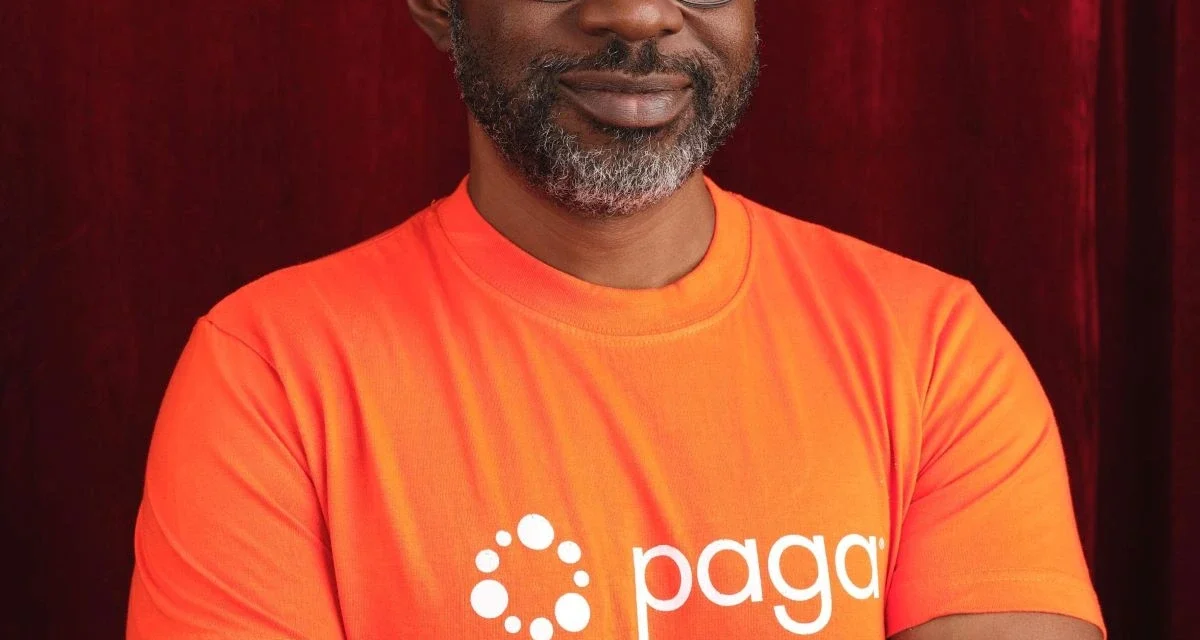
Few folks have watched this hole extra intently than Tayo Oviosu. After over 17 years constructing funds infrastructure throughout the continent, the Paga Group CEO has a clear-eyed view of what the brand new expertise solves and what it doesn’t.
A greenback stablecoin can cross borders virtually immediately, he notes, however the recipient often needs native foreign money in a checking account. Everything between these two factors stays arduous: deep liquidity so conversion doesn’t transfer the worth, entry to international alternate formed by central financial institution coverage, licences in every nation, and a dependable method to money out.
In this unique interview with Nairametrics, Tayo Oviosu breaks down why pace alone has not made African commerce seamless, and what nonetheless stands in the way in which.
Nairametrics: What are the most important obstacles that stablecoins can not remedy on their very own when companies transfer cash throughout African borders?
Tayo Oviosu: A greenback stablecoin can transfer in seconds, however the individual on the opposite finish often needs naira in an account. Everything between these two factors remains to be arduous. You want deep native liquidity so conversion doesn’t transfer the worth in opposition to you.
You want entry to international alternate, which relies on central financial institution coverage. You want a license in every nation, and KYC and sanctions screening that fulfill every regulator. Regulation can be nonetheless catching up with the expertise. You additionally want a dependable method to money out.
A blockchain doesn’t offer you a banking relationship in Kenya or a license in Ghana. Or offer you liquidity. People constructing on this area are inclined to study that late.
Nairametrics: For a typical cross-border enterprise payment, how do the entire prices and settlement occasions of stablecoin-enabled transfers evaluate with standard payment channels, together with international alternate, liquidity and cash-out prices?
Tayo Oviosu: A standard hall stacks charges. The sending financial institution takes one, the correspondent takes one other, there’s an FX unfold, then the receiving financial institution, then cash-out if the recipient wants money. Settlement often takes one to 3 days.
Moving the stablecoin itself prices much less as a result of fewer events are concerned, and it takes seconds.
Most importantly, you additionally keep away from pre-funding balances to execute transactions. A fintech in Hong Kong doesn’t must pre-fund cash with Paga in Nigeria to ship cash to Nigeria.
They can ship cash to Paga in stablecoins, and the recipient will get Naira. Imagine that at scale. Instant world funds.
Nairametrics: Are competing blockchain networks, stablecoins and payment platforms making Africa’s payment techniques extra interoperable, or creating one other layer of fragmentation?
Tayo Oviosu: Both, to be sincere. More choices are good for builders, however each new chain and each new stablecoin is one other island until somebody connects them. A enterprise shouldn’t should care which chain its cash moved on.
That’s an enormous motive we’re multi-chain and multi-stablecoin, so the complexity stays on our facet of the road.
What wants to alter is for regulators to acknowledge one another’s licensing for this sort of exercise, so an organization authorised in a single market doesn’t begin from zero within the subsequent. Local payment rails throughout international locations additionally want to attach, and the work on pan-African settlement helps there.
Someone then has to construct the plumbing that makes all of it usable. Our plan is to take Paga Engine into different African markets with native licenses and companions, one platform with many corridors.
Nairametrics: Paga has introduced partnerships with Sui and Crossmint. How do these preparations match collectively, and what can Paga now do this it couldn’t do earlier than?
Tayo Oviosu: Our purpose at Paga is to be the worldwide monetary infrastructure for Africans. This means offering the engine that powers different corporations’ entry to home and world monetary rails.
Today, over 375 enterprises belief and construct on Paga. Our partnership with Sui and Crossmint is vital to our mission: offering entry to world monetary rails and new methods to maneuver cash utilizing stablecoins.
The Sui blockchain offers us a quick, low-cost stablecoin community and a greenback stablecoin, USDsui, which gives yield. We have partnered with Crossmint to entry stablecoin pockets infrastructure throughout greater than 50 blockchains. Paga Engine sits beneath each and does the arduous half in Africa: turning native foreign money into {dollars} and again once more, legally and at scale, to supply world connectivity.
In observe, meaning an organization anyplace on this planet pays somebody in Nigeria in a stablecoin and have it land as Naira in a checking account inside minutes. It additionally means an African enterprise or particular person pays globally with considerably decrease prices utilizing native foreign money. Before, that meant correspondent banks, T+2, and lots of intermediaries taking a lower.
Nairametrics: How a lot of this infrastructure is operational in the present day, and may you share figures on precise transaction volumes, enterprise adoption, or measurable value financial savings?
Tayo Oviosu: The basis has been reside for years. More than 375 enterprises now run on Paga Engine, principally home names but additionally world corporations. Last yr we processed $11 billion throughout 169 million transactions, and in the present day we’re working at about $1.5 billion a month. The enterprise is worthwhile, so we’re constructing the subsequent part from a place of power.
The stablecoin layer is newer, and we’re readying to go reside quickly. We will launch with USDSui, USDC, and USDT on the Sui and Solana blockchains. Post preliminary launch, we’ll broaden to Arc, Tempo, and Ethereum-based blockchains to maximise protection. As an infrastructure supplier, our plan is to be multi-stablecoin and multi-chain.
Nairametrics: Which elements of Paga’s payment infrastructure does the corporate personal and management, and which rely upon exterior suppliers? How simply might Paga swap suppliers if a crucial companion modified its phrases or turned unavailable?
Tayo Oviosu: The overwhelming majority of our infrastructure is owned by us. Where we don’t personal the infrastructure, we’ve inbuilt redundancies to make sure operational resilience. We personal the licenses. We maintain a cellular cash operator license, a microfinance financial institution license, and a world remittance license.
We additionally personal the ledger, the wallets, the compliance stack, and the orchestration layer that routes each transaction, and we’ve direct connections to settlement banks, NIBSS, and the cardboard schemes.
Seventeen years went into that, and no person should buy it shortly.
Nairametrics: As stablecoin-based funds develop, who captures the financial worth throughout the transaction chain, from the African fintech to the blockchain community, stablecoin issuer, and different intermediaries?
Tayo Oviosu: Issuers earn yield on the reserves behind stablecoins, and that could be a very massive enterprise. The networks earn small charges on every transaction.
A serious motive we’ve partnered with Sui is an settlement to share yield with prospects on USDsui. That mentioned, financial worth exists throughout the worth chain.
The fintechs will earn transaction charges, and in addition the liquidity suppliers will earn charges.
Nairametrics: If a stablecoin issuer freezes funds or a crucial infrastructure supplier suffers an outage, who’s finally accountable to the client, and what protections are in place?
Tayo Oviosu: Stablecoin issuers don’t essentially or usually maintain custody of the stablecoins. They do maintain the underlying asset that backs the stablecoin and, to present the general public confidence, audit these belongings and make these audits publicly out there. US Dollar stablecoins are usually backed 1:1 with US Treasury payments.
Custody of the stablecoin relies on what sort of pockets holds the worth – a custodial or non-custodial pockets. The distinction is who controls the keys wanted to maneuver funds from the pockets. In a non-custodial pockets, the proprietor has full management over the funds, and nobody can freeze their cash.
For custodial wallets, whoever holds custody, i.e., the keys, can freeze the cash. That’s the place regulation comes into play. Regulators worldwide are within the strategy of regulating custodial companies.
Nairametrics: What would African fintechs must construct or spend money on to achieve larger management over the infrastructure underpinning their payment companies, fairly than stay depending on world suppliers?
Tayo Oviosu: Own your licenses, your ledger and your compliance. Build your personal relationships with banks and liquidity suppliers. Keep the routing layer in-house so you’ll be able to swap suppliers with out a rewrite, and rent the engineers to keep up all of it.
The temptation is to sew collectively just a few distributors, put a model on high and name it a product. That works till certainly one of them modifications its pricing or its thoughts. It’s why we opened Paga Engine to different corporations in 2022. We serve companies, so we by no means compete with our shoppers for his or her prospects, and a variety of fintechs shouldn’t should rebuild what we spent years on.
Nairametrics. Looking three to 5 years forward, what main change in African funds do you anticipate, and what do you assume the trade is at the moment underestimating?
Tayo Oviosu: I anticipate stablecoins to be the glue that connects Africa to the worldwide financial system and makes it simple for Africans to attain their continental or world ambitions.
Africans may have the liberty to commerce and transfer about with out worrying about whether or not their native foreign money shall be convertible and accepted. This change will unlock commerce in a serious approach. It is kind of thrilling.
What the trade is perhaps underestimating is the liquidity wanted to attain that purpose and the regulatory limitations that may sluggish issues down. Regulators, particularly monetary regulators, usually don’t transfer on the pace of expertise improvement.
I’m hopeful, although, that African central banks and securities and alternate commissions will see the advantages of innovation and drive understanding and quicker entry to spur progress.
[ad_2]
Source link