
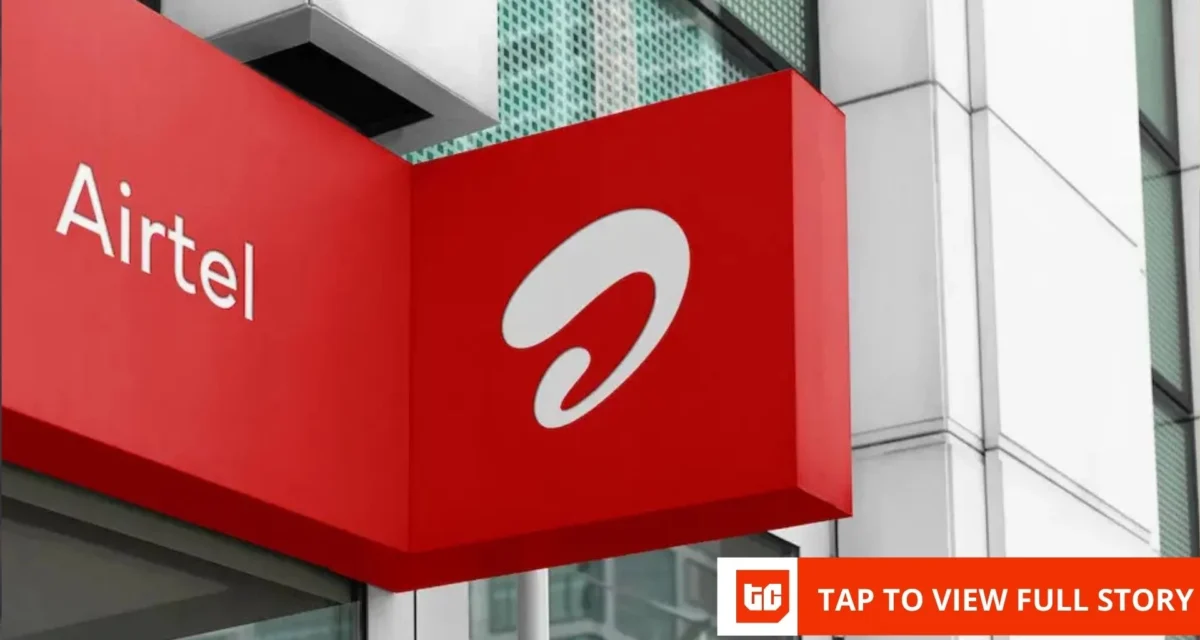

Airtel Nigeria is including prospects, promoting extra data, and producing larger earnings. Yet a decline in its quarterly operating margin means that rising demand just isn’t translating into stronger profitability on the identical tempo.
The firm’s mobile-services Earnings Before Interest, Taxes, Depreciation, and Amortisation (EBITDA) margin fell from roughly 58.8% within the first quarter of its 2027 monetary yr to 57.5% within the second. Although its half-year efficiency remained considerably stronger than a yr earlier, the sequential decline factors to the rising problem of managing operating prices whereas increasing capability to accommodate rising site visitors.
That stress is turning into central to Airtel Nigeria’s growth story. As data consumption accelerates, the operator should steadiness community funding and rising operating bills towards the necessity to maintain margins and generate money. The query is now not merely how a lot demand it could actually seize, however how effectively it could actually convert that demand into lasting monetary returns.
For Airtel Nigeria, the problem is to show Nigeria’s urge for food for connectivity into earnings and, finally, money, with out permitting the cost of development to erode profitability.
For the six months ended September 2026, Nigeria’s mobile-services income elevated 44.6% in reported {dollars} to $1.008 billion. Underlying EBITDA rose quicker, climbing 49.2% to $586 million, whereas the half-year margin improved to 58.2% from 56.3%.
Those comparisons qualify the quarterly warning. Airtel Nigeria’s earnings are usually not shrinking, nor has the enterprise misplaced the advantages of scale. Over the half-year, quicker EBITDA development signifies that rising income and cost efficiencies continued to help profitability.
That strategy displays administration’s established strategy.
“During the quarter, we accelerated investment to enhance coverage and data capacity while also expanding our fibre network,” Airtel Africa CEO Sunil Taldar mentioned, commenting on the nine-month results for the period ended December 2025.
The newest outcomes present that funding is continuous. But additionally they illustrate the monetary self-discipline required to make sure that a bigger community produces enticing returns.
Currency actions strengthened the reported efficiency. The weighted-average alternate price improved from ₦1,553 per greenback to ₦1,360. Excluding foreign money actions, mobile-services income grew 26.6%, and EBITDA elevated 30.7%—nonetheless substantial, however under the reported greenback will increase.
A stronger naira, due to this fact, helped the monetary presentation. It shouldn’t be confused with an equal enchancment in operating effectivity.
Fuel margins strain and the money stakes
Energy stays a central problem. In its September 2026 half-year outcomes, Airtel mentioned gas costs in Nigeria had doubled for the reason that begin of the monetary yr. Revenue development and effectivity measures nonetheless supported year-on-year margin enchancment. The firm didn’t disclose a separate determine for Nigerian gas or vitality expenditure, leaving the precise enhance in its vitality invoice unquantified.
That publicity stays a threat to profitability. “Looking ahead, margin performance will continue to be influenced by the macroeconomic environment, including its impact on fuel costs,” Airtel Africa CEO Sunil Taldar mentioned within the half-year assertion.
Although his warning lined the broader group, the sharp rise in Nigerian gas costs makes it notably related to the native enterprise.
The stress is simple. More prospects and better utilization permit an operator to unfold infrastructure prices throughout a bigger income base. Rising vitality bills can take up a part of that benefit.
Demand stays robust. Airtel Nigeria’s buyer base elevated 15.1% to 61.7 million, whereas month-to-month smartphone data consumption rose from 12.7GB to 16.7GB per buyer. Data income elevated 33.8% in fixed foreign money.
These figures don’t set up that every extra gigabyte turned dearer to ship. They present that rising consumption coincided with decrease quarterly margins, making cost management more and more essential.
Meanwhile, Airtel is spending extra to maintain that demand. Nigeria’s first-half capital expenditure rose 139.9% to $177 million. Operating free money move elevated 28.2% to $409 million—wholesome development, however slower than EBITDA as funding absorbed extra earnings.
The distinction issues. Airtel Nigeria’s operating free money move measure already deducts capital expenditure from EBITDA. It just isn’t, nevertheless, the identical as money out there for shareholders after taxes, financing obligations and different funds.
The wider group demonstrates that hole. Management reported normalised free money move of $280 million, down from $368 million, regardless of stronger earnings, as money funding accelerated. These are group figures, not Nigeria-only outcomes, however they present why larger EBITDA doesn’t essentially translate into larger discretionary money.
More utilization should produce enough income
Customer spending presents one other balancing act. Nigeria’s mobile-services common income per consumer reached $2.80, rising 28.3% in reported foreign money and 12.3% in fixed foreign money.
Management nonetheless acknowledged slower data-ARPU momentum. Newly acquired prospects initially devour much less, whereas bigger bundles cut back income per gigabyte for heavier customers. Airtel described its pricing strategy as “more for more” and mentioned it had not seen proof of a worth warfare.
Encouraging consumption can strengthen buyer relationships, however site visitors development doesn’t essentially generate proportional income development. Airtel Nigeria should earn sufficient from that utilization to justify extra capability with out weakening its affords.
Its outcomes nonetheless help confidence: half-year margins and operating free money move improved. The quarterly decline is a warning to observe, not proof of a failing mannequin. The subsequent take a look at is whether or not disciplined spending and operating efficiencies can protect the monetary returns that Airtel’s increasing community is meant to ship.