

Published November 1, 2026
The problem with putting an African fintech on Wall Street
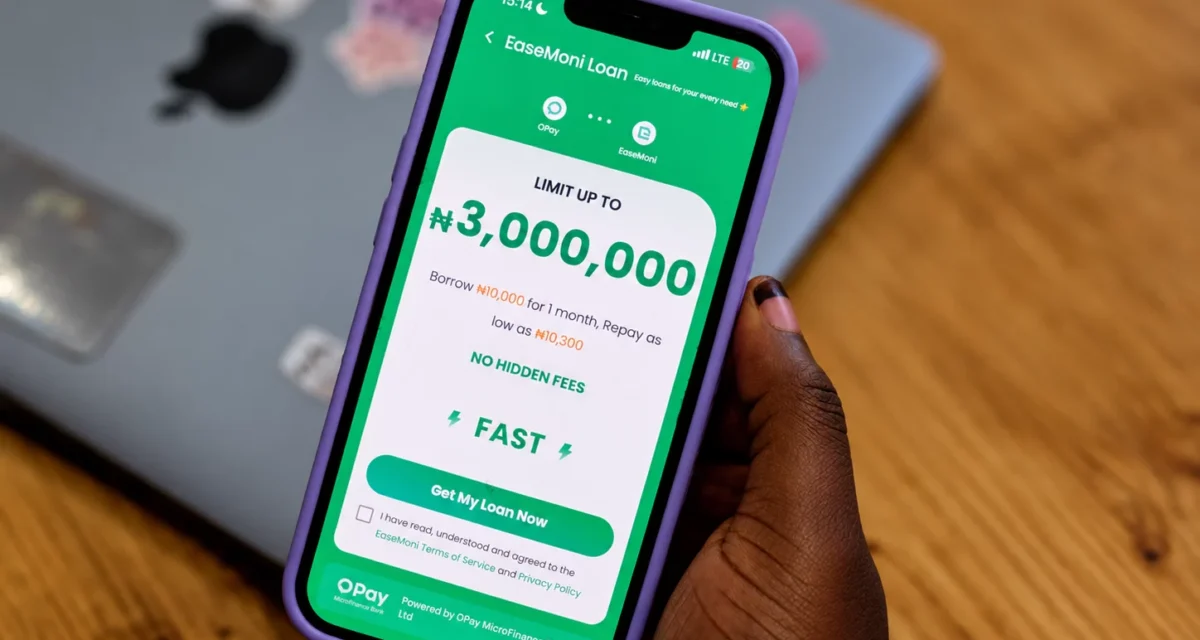
A smartphone displaying OPay’s EaseMoni mortgage interface, promoting mortgage limits of as much as ₦3 million ($2,234). Image supply: TechCabal
OPay had everything an IPO is supposed to deliver: a $4 billion valuation, a $304 million share sale, backing from SoftBank and a ceremonial opening bell on the New York Stock Exchange. On October 30, its executives stood on the alternate ground because the Nigerian funds firm ready to change into certainly one of Africa’s greatest expertise listings within the US. By the next morning, the deal was useless. Not a single share had traded.
OPay had priced 16 million American Depositary Shares at $19 each, the underside of its marketed vary. By 2 pm, indicative bids had fallen to between $16.25 and $16.75. The NYSE halted buying and selling in its shares with information pending at 3.30 pm. The subsequent morning, the underwriting syndicate walked away.
OPay described the choice as an abundance of warning over an inquiry in an undisclosed overseas jurisdiction, which it known as “immaterial to its core business operations”.
This is an awkward clarification for an organization whose bankers had simply deserted its greatest capital markets transaction. Whatever the inquiry involved, it was materials sufficient to cease a $4 billion itemizing. And the timing raises one other query: was the regulatory challenge the one problem, or did it give buyers and bankers an exit from a deal already struggling to draw consumers?
The deal was already wobbling
Citigroup, Deutsche Bank, CICC and Standard Bank had been among the many banks underwriting the providing. Their job was to get OPay’s shares into public buyers’ fingers. Walking away after pricing a deal shouldn’t be routine. Underwriters usually want a contractual foundation to terminate their commitments, akin to a failed closing situation or a cloth antagonistic change.
OPay’s shares had already been priced on the backside of the vary after demand fell wanting expectations. The indicated opening worth instructed buyers had been unwilling to pay even that quantity. A weak debut wouldn’t, by itself, cancel an underwriting settlement. But a regulatory inquiry may complicate the authorized assurances required to finish the transaction.
The collapse additionally put different plans on maintain. A proposed $200 million private placement from Stanbic Africa Holdings, which depended on the itemizing closing, was halted. OPay’s deliberate twin itemizing on the Nigerian Exchange was left in limbo.
The episode exposes a problem with the way in which emerging-market fintechs have been packaged for worldwide buyers. The acquainted mannequin is to construct a big enterprise in an area market, place it beneath an offshore holding firm and pitch worldwide buyers on a valuation that displays the dimensions of the chance fairly than the constraints of the working market.
OPay took that mannequin throughout a number of borders; it’s included within the Cayman Islands, managed from Singapore, based by Chinese entrepreneur Yahui Zhou, backed by Japan’s SoftBank and listed in New York. Yet Nigeria accounts for 89.5% of its operating revenue.
The construction may also help an organization appeal to worldwide capital, but it surely doesn’t make the enterprise impartial of the nation the place it earns most of its cash. OPay nonetheless relies upon on Nigerian clients, monetary establishments and regulators. It additionally wants to satisfy the authorized and compliance necessities of the jurisdictions by means of which it’s owned and financed.
For public-market buyers, these aren’t separate questions, contemplating an inquiry in a single jurisdiction, or a lacking home no-objection clearance, can maintain up an providing hundreds of miles away. The offshore holding firm doesn’t insulate the issuer from the dangers connected to its working enterprise.
More than a funds enterprise
OPay’s prospectus additionally supplied a extra difficult image of the corporate than its acquainted funds app would possibly counsel.
Revenue rose from $206 million in 2024 to $536 million in 2025, and the corporate moved from an working loss to a internet revenue of $72.5 million. It had 50 million monthly active users by the first half of 2026. On the floor, this regarded just like the type of progress story that public buyers ought to need.
But a big a part of OPay’s enterprise comes from lending. Digital loan financing generated $260 million in 2025, nearly half of its income. The firm put aside $121.3 million for anticipated credit score losses that 12 months. In the primary half of 2026, it recorded an additional $118.4 million in credit score loss allowances.
OPay also held more than $533 million in short-term treasury investments, a lot of it in Nigerian asset administration funds.
Payments and lending are totally different companies, even once they sit inside the identical app. Payments generate income from transferring cash. Lending exposes an organization to debtors who might not repay. Treasury investments convey one other set of questions on liquidity, counterparties and the market through which these belongings are held.
So, on this case, buyers had been being requested to know a lender and an funding portfolio tied closely to Nigeria’s monetary system. It is a special proposition from the asset-light software program story that usually attracts premium expertise valuations.
The worth of going international
Read sensible insights about Francophone Africa’s tech ecosystem—weekly.
OPay’s failed itemizing doesn’t imply African fintechs can not command worldwide valuations. It does present the boundaries of treating an offshore company construction as a shortcut to worldwide capital.
An organization can incorporate within the Cayman Islands, handle its affairs from Singapore and promote shares in New York. But its underlying enterprise stays uncovered to the principles, currencies and monetary establishments of the market the place it operates.
This is the a part of the story {that a} $4 billion valuation can not make disappear. OPay has the customers, transaction volumes, and income to make a case to Wall Street, but it surely nonetheless has to persuade buyers that the enterprise behind these numbers can stand up to scrutiny throughout each jurisdiction concerned.
Kenn Abuya
Senior Reporter, TechCabal
Thank you for studying this far. Feel free to e mail kenn[at]bigcabal.com, with your ideas about this version of NextWave. Or simply click on reply to share your ideas and suggestions.
We’d love to listen to from you
Psst! Down right here!
Thanks for studying at the moment’s Next Wave. Please share. Or subscribe if somebody shared it to you
here
without cost to get contemporary views on the progress of digital innovation in Africa each Sunday.
As at all times be happy to e mail a reply or response to this essay. I take pleasure in studying these emails rather a lot.
TC Daily newsletter is out daily (Mon – Fri) brief
of all of the expertise and enterprise tales you could know. Get it in your inbox every weekday at 7 AM (WAT).
Follow TechCabal on Twitter, Instagram, Facebook, and LinkedIn to remain engaged in our real-time conversations on tech and innovation in Africa.